
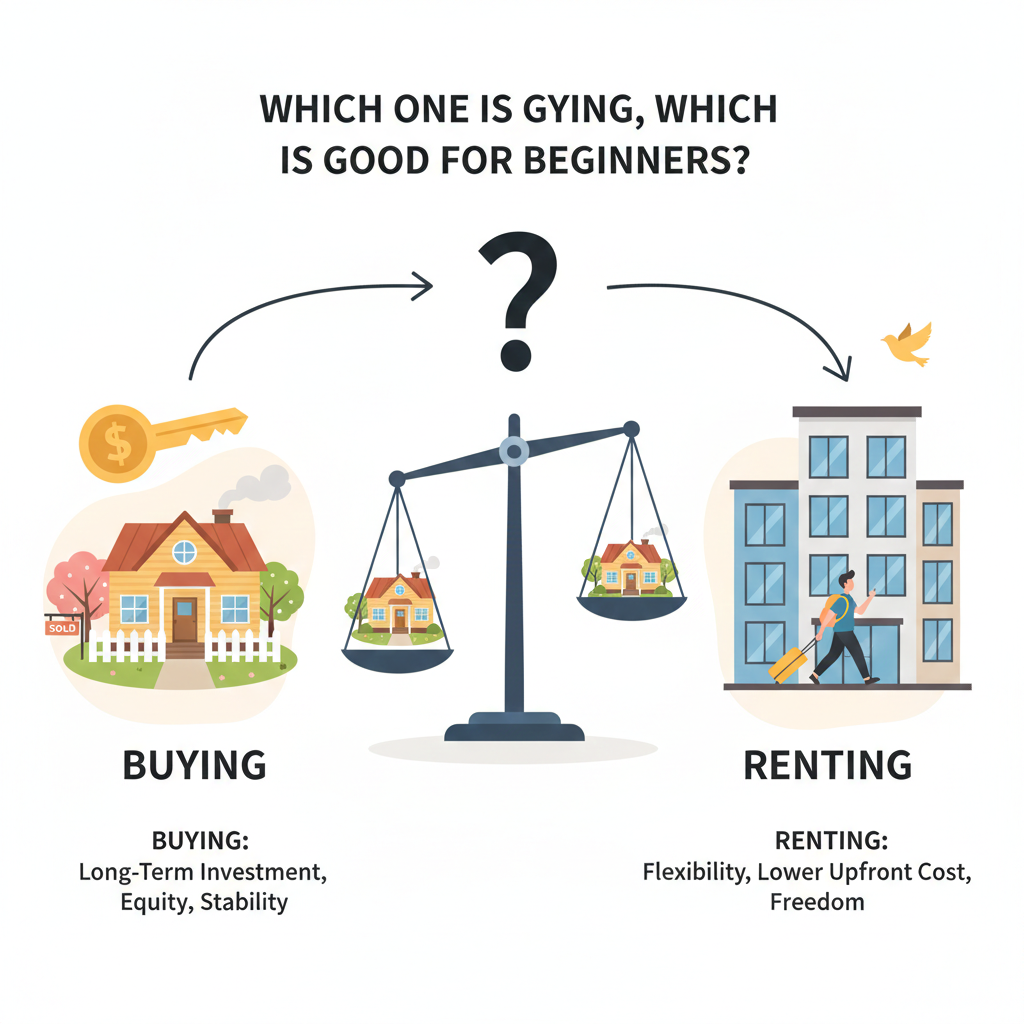
If you are new to real estate, one of the first questions you will face is this:
Should I buy a home or should I rent?
There is no single right answer. The better choice depends on your money, your lifestyle, and your long-term plans.
This guide explains buying vs renting in very simple words, so even a beginner can understand and decide wisely.
What Does Renting Mean?
Renting means you pay monthly money to live in a home that someone else owns.
You sign a rental agreement, usually for 6 or 12 months. During this time, you live in the house or apartment, but it does not belong to you.
Key points about renting
- You pay rent every month
- You do not own the property
- The landlord owns the property
- You can leave after the lease ends
What Does Buying Mean?
Buying means you purchase a home and become the owner.
Most people do not pay the full price at once. They take a loan from a bank called a mortgage and pay it back monthly over many years.
Key points about buying
- You own the property
- You pay a monthly mortgage
- You are responsible for repairs
- You can sell the property later
Monthly Cost: Buying vs Renting
Many beginners think buying is always cheaper. That is not always true.
Renting costs include
- Monthly rent
- Utilities (electricity, water, internet)
- Sometimes renter’s insurance
That’s usually it.
Buying costs include
- Monthly mortgage payment
- Property taxes
- Home insurance
- Maintenance and repairs
- HOA fees (in some areas)
Buying often costs more per month, especially in the beginning.
Upfront Money Needed
This is a very important difference.
Renting upfront costs
- Security deposit
- First month’s rent
- Sometimes last month’s rent
This is usually manageable.
Buying upfront costs
- Down payment (often 3%–20% of home price)
- Closing costs
- Inspection fees
Buying requires much more cash upfront.
Flexibility and Freedom
Renting gives flexibility
- Easy to move to another city
- Good for job changes
- Less commitment
If you are unsure about your future, renting is safer.
Buying reduces flexibility
- Harder to move quickly
- Selling a home takes time
- Costs money to sell
Buying is better if you plan to stay in one place for years.
Maintenance and Repairs
When you rent
- Landlord fixes major problems
- You usually pay nothing for repairs
- Less stress
When you buy
- You pay for all repairs
- Roof, plumbing, AC — everything is your responsibility
- Repairs can be expensive
Beginners often forget this part when thinking about buying.
Building Wealth: Buying vs Renting
This is where buying has a big advantage.
Renting does NOT build wealth
- Rent money is gone forever
- You do not own anything at the end
Buying CAN build wealth
- Each payment increases your ownership
- Property value may go up over time
- You can sell later for profit
Buying can help build long-term wealth, but only if done wisely.
Risk Level for Beginners
Renting is low risk
- No long-term loan
- No market risk
- No repair surprises
Buying has higher risk
- Home value can go down
- Job loss can make payments hard
- Unexpected repairs can hurt finances
Beginners should be careful not to rush into buying.
Credit Score Impact
Renting
- Usually does not improve credit score
- Safer if credit is weak
Buying
- Mortgage payments affect credit
- On-time payments improve credit
- Missed payments hurt badly
Buying requires good financial discipline.
Emotional Factors
This part is often ignored.
Renting feels lighter
- Less responsibility
- Less pressure
- Easy lifestyle
Buying feels stable
- Sense of ownership
- Pride in your home
- Feeling of security
Both feelings are valid. Choose what fits your mindset.
When Renting Is Better for Beginners
Renting is usually better if:
- You are early in your career
- You plan to move soon
- You do not have savings
- You want low stress
- You are still learning about money
Renting can be a smart first step, not a failure.
When Buying Is Better for Beginners
Buying may be better if:
- You have stable income
- You plan to stay long-term
- You have emergency savings
- You understand the costs
- You are ready for responsibility
Buying should be a planned decision, not emotional.
A Simple Beginner Rule
Here is an easy rule to remember:
If you are unsure, rent.
If you are stable and prepared, consider buying.
There is no rush. Real estate rewards patience.
Final Thoughts
Buying and renting are both valid choices.
Renting offers freedom and low risk.
Buying offers ownership and long-term potential.
As a beginner, your goal should be financial safety first, not social pressure.
Learn, plan, save — and then decide.