
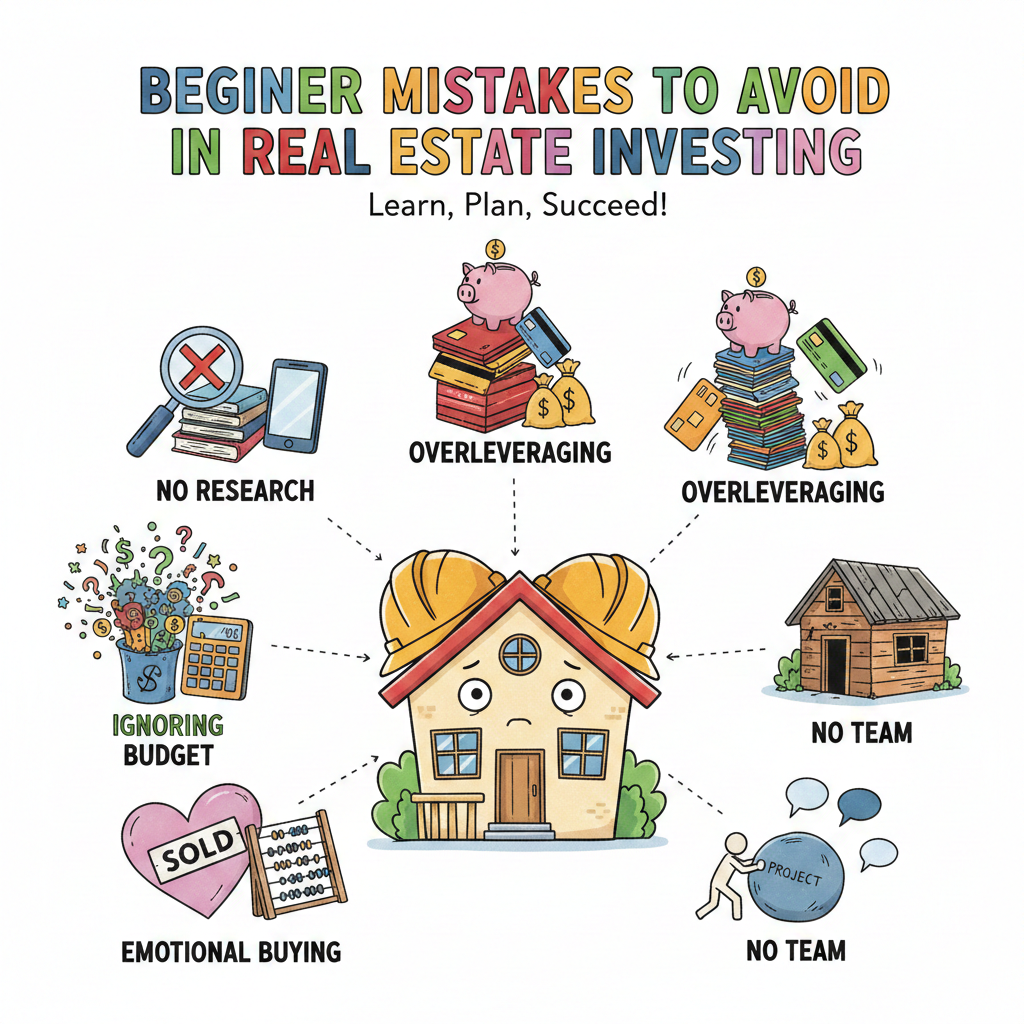
Real estate investing can help build long-term wealth.
Many people invest in property to earn rental income or to sell later for a profit.
But beginners often make mistakes.
These mistakes can cost money, create stress, and slow down progress.
The good news is that most mistakes can be avoided with basic knowledge.
In this guide, you will learn the most common beginner mistakes and how to avoid them.
Not Understanding the Numbers
One of the biggest mistakes is buying a property without checking the numbers carefully.
Many beginners focus only on:
- The price of the house
- How nice it looks
- How much rent they hope to get
But real estate investing is about math.
You must calculate:
- Mortgage payment
- Property taxes
- Insurance
- Repairs and maintenance
- Vacancy costs
- Property management fees
If you skip this step, you may lose money every month.
Always know your expected cash flow before buying.
Overestimating Rental Income
New investors often assume they can charge high rent.
But rent depends on:
- Location
- Market demand
- Property condition
- Competition
If you guess too high, your numbers will be wrong.
Always research local rental prices.
Look at similar properties in the same area.
Use realistic numbers, not optimistic ones.
Underestimating Expenses
Repairs cost money.
Roofs leak. Water heaters break. Appliances fail.
Beginners often forget to budget for these.
A good rule is to set aside money every month for maintenance.
Even if nothing breaks now, it will later.
Unexpected costs are normal in real estate.
Plan for them.
Buying in the Wrong Location
Location matters more than almost anything else.
A beautiful property in a weak area may struggle to attract tenants.
Before buying, check:
- School ratings
- Crime rates
- Job growth
- Public transportation
- Nearby stores and services
Strong locations usually have:
- Steady rental demand
- Better long-term value growth
Never rush into buying without studying the area.
Using Too Much Debt
Loans can help you buy property.
But too much debt is dangerous.
If your loan payments are too high:
- You may struggle during vacancies
- You may panic during market downturns
- You may not have cash for emergencies
Use leverage carefully.
Make sure your monthly payments are affordable.
Avoid stretching your budget too thin.
Skipping an Emergency Fund
Some beginners use all their savings for a down payment.
This is risky.
After buying a property, you still need money for:
- Repairs
- Vacancies
- Unexpected bills
Without savings, even a small problem can cause financial stress.
Always keep an emergency fund.
Not Screening Tenants Properly
Choosing the wrong tenant can be expensive.
Late payments and property damage create problems.
Always:
- Run background checks
- Check credit history
- Verify income
- Contact previous landlords
Taking time to screen tenants reduces risk.
Never skip this step just to fill a vacancy quickly.
Ignoring Property Management Needs
Some beginners think managing property is easy.
But it requires:
- Collecting rent
- Handling maintenance requests
- Solving tenant disputes
- Keeping records
If you do not have time, consider hiring a property manager.
Yes, it costs money.
But it may save stress and mistakes.
Trying to Get Rich Quickly
Real estate is usually a long-term investment.
Some beginners expect fast profits.
They watch videos about quick flips and huge returns.
But real estate often builds wealth slowly.
Rent increases over time.
Loans get paid down gradually.
Property values may rise over years.
Patience is important.
Not Doing Proper Inspections
Never skip a home inspection.
Even if the property looks good, hidden problems may exist.
Inspections can reveal:
- Structural issues
- Electrical problems
- Plumbing concerns
- Roof damage
Spending money on inspection can save thousands later.
Always check before buying.
Failing to Understand the Market Cycle
Real estate markets go through cycles.
Prices go up. Prices go down.
Rents can increase or decrease.
Beginners sometimes buy when prices are very high without understanding risk.
It is important to:
- Study local trends
- Avoid emotional decisions
- Focus on long-term value
Markets change, but careful planning helps manage risk.
Not Learning Basic Laws
Real estate is regulated by laws.
These include:
- Landlord-tenant laws
- Fair housing laws
- Local rental rules
Breaking laws can lead to fines or lawsuits.
Before renting property, learn the basic rules in your state.
Knowledge protects you.
Letting Emotions Control Decisions
Buying real estate should be a business decision.
Some beginners fall in love with a property.
They ignore bad numbers because they “like the house.”
Investing is not about emotion.
It is about income, expenses, and long-term value.
Stay logical.
Not Having a Clear Plan
Some people jump into real estate without a goal.
Ask yourself:
- Do I want monthly income?
- Do I want long-term appreciation?
- Am I investing for retirement?
Clear goals help guide decisions.
Without a plan, it is easy to make random choices.
Avoiding Professional Advice
Trying to do everything alone can lead to mistakes.
Professionals who may help include:
- Real estate agents
- Accountants
- Attorneys
- Property inspectors
You do not need to rely on others for every decision.
But good advice can prevent costly errors.
Final Thoughts
Real estate investing can be rewarding.
But beginners often make avoidable mistakes.
The most common problems come from:
- Ignoring the numbers
- Taking too much risk
- Acting too quickly
- Failing to plan
The key to success is patience, research, and careful decision-making.
Real estate is not a race.
It is a long-term journey.
If you move slowly, calculate carefully, and learn step by step, you reduce risk and increase your chances of success.
Avoiding these beginner mistakes can help you build a strong foundation for smart real estate investing.