
Buying a home sounds exciting, but it can also feel confusing.
One of the first terms you will hear is down payment.
In this guide, we will explain what a down payment is and why it matters.
Everything is explained in very simple words, step by step.
What Is a Down Payment?
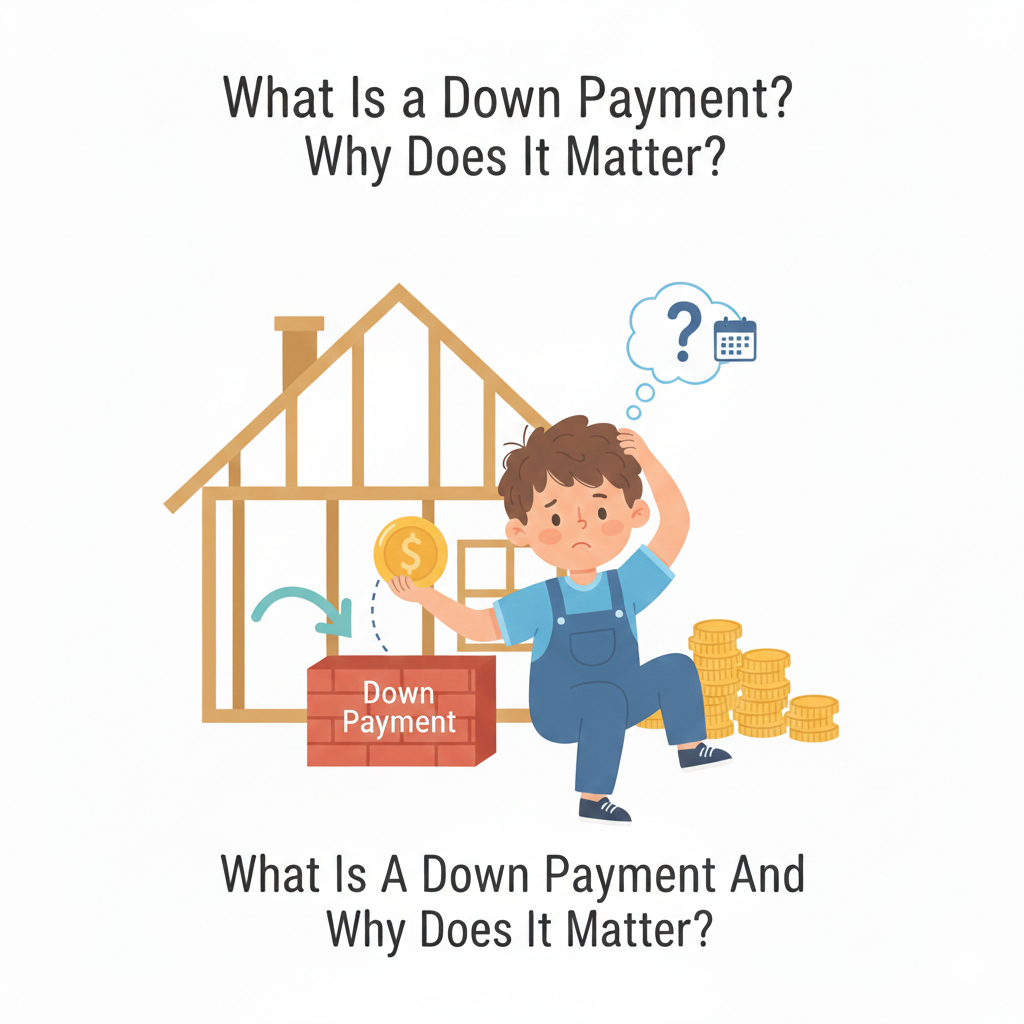
A down payment is the money you pay upfront when you buy a home.
It is not borrowed money.
It comes from your own savings.
The rest of the home price is usually paid using a mortgage loan.
Simple example
- Home price: $300,000
- Down payment: $30,000
- Loan amount: $270,000
You pay $30,000 first.
The bank lends you the remaining $270,000.
That first $30,000 is the down payment.
Why Do Banks Ask for a Down Payment?
Banks want to reduce their risk.
When you put your own money into a home:
- You are more serious about buying
- You are less likely to walk away
- The bank feels safer lending money
A down payment shows the bank that you are financially responsible.
How Much Is a Typical Down Payment?
There is no single rule, but here are common numbers in the US:
20% Down Payment
This is considered ideal.
- You avoid extra fees
- Your monthly payment is lower
- Banks like this option
Example:
- $300,000 home → $60,000 down payment
3% to 5% Down Payment
Common for first-time buyers.
- Requires less savings
- Monthly payment is higher
- Extra insurance may be required
0% Down Payment
Possible with special programs.
- VA loans (for veterans)
- USDA loans (rural areas)
Not everyone qualifies for these programs.
What Happens If Your Down Payment Is Small?
A smaller down payment means:
- You borrow more money
- Your monthly payment increases
- You may pay extra fees
One common extra cost is Private Mortgage Insurance (PMI).
What Is PMI?
PMI protects the bank, not you.
If your down payment is less than 20%, banks often require PMI.
- It is added to your monthly payment
- It increases the total cost of the loan
- It can be removed later in some cases
This is one reason people try to save for a larger down payment.
Why a Larger Down Payment Is Better
Putting more money down has clear benefits.
Lower Monthly Payments
You borrow less money, so payments are smaller.
Less Interest Over Time
Interest is charged on the loan amount.
A smaller loan means less interest.
Easier Loan Approval
Banks prefer borrowers with higher down payments.
More Home Equity from Day One
Equity is the part of the home you truly own.
A bigger down payment gives you instant equity.
Where Does Down Payment Money Come From?
Most people save for years to build a down payment.
Common sources include:
- Personal savings
- Money from selling another home
- Gifts from family (allowed in many cases)
- Down payment assistance programs
Banks usually ask for proof of where the money came from.
Can You Use Gift Money for a Down Payment?
Yes, in many cases.
But there are rules:
- The gift must be documented
- The giver may need to sign a letter
- The money cannot be a hidden loan
Always check with your lender before using gift money.
What Are Down Payment Assistance Programs?
Some state and local programs help buyers with down payments.
These programs are often for:
- First-time home buyers
- Low to middle income families
- Certain professions
Help may come as:
- Grants
- Low-interest loans
- Deferred payment loans
Rules vary by location.
Is It Smart to Use All Your Savings for a Down Payment?
Not always.
You still need money after buying a home.
Other costs include:
- Closing costs
- Moving expenses
- Emergency repairs
- Monthly bills
It is important to keep some savings after paying the down payment.
Down Payment vs Closing Costs
These two are different but often confused.
Down Payment
- Goes toward the home price
- Builds your ownership
Closing Costs
- Fees for paperwork, taxes, and services
- Usually 2% to 5% of the home price
- Paid at closing, not monthly
You usually need money for both.
Does a Down Payment Change Your Interest Rate?
Yes, it can.
A larger down payment often leads to:
- Lower interest rates
- Better loan options
Banks reward borrowers who appear less risky.
Is Waiting to Save More Always the Best Choice?
Not always.
Waiting has pros and cons.
Pros of Waiting
- Bigger down payment
- Lower monthly payments
- Less stress later
Cons of Waiting
- Home prices may rise
- Rent payments continue
- Interest rates may change
The best choice depends on your situation.
Common Down Payment Mistakes to Avoid
- Emptying all savings
- Forgetting about closing costs
- Borrowing money secretly
- Not asking about assistance programs
- Rushing without planning
Taking time to plan helps avoid regret.
Final Thoughts
A down payment is one of the most important parts of buying a home.
It affects:
- Your loan approval
- Your monthly payment
- Your total cost over time
There is no “perfect” amount for everyone.
The best down payment is one that fits your budget and keeps you financially safe.
Call to Action
If you are new to real estate, take time to learn each step.
Explore more beginner-friendly guides on EasyPropertyGuide to understand buying, renting, and investing the smart way.